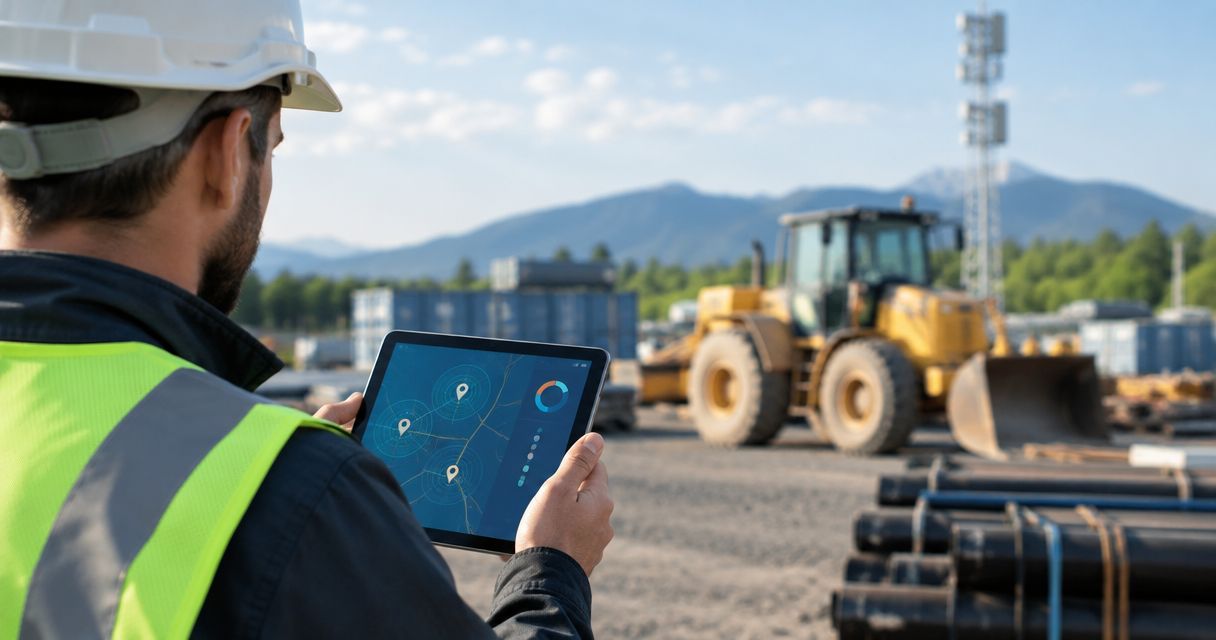
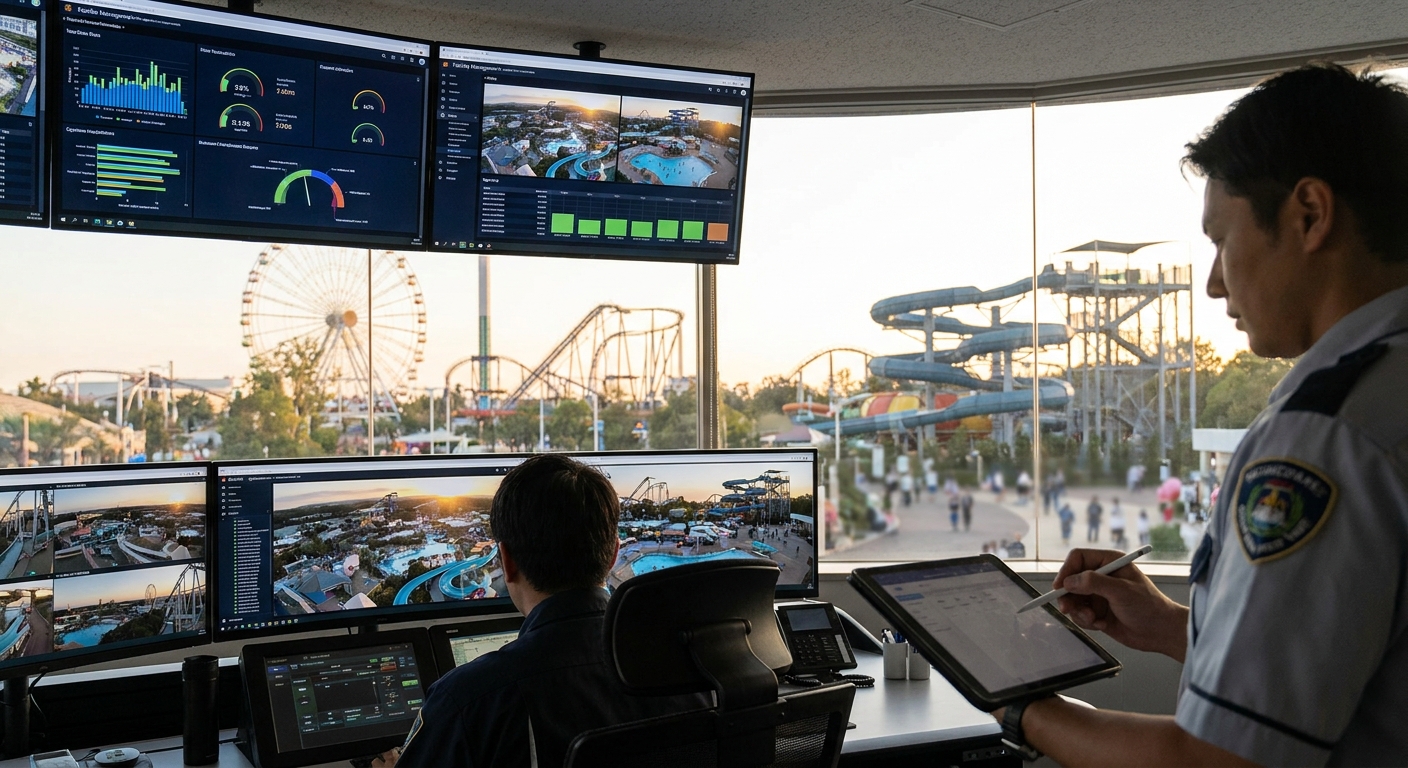
Water parks lose more uptime to pump failures and pH swings than to weather closures, and amusement parks run rides, HVAC, and refrigeration across dozens of buildings with no shared view of any of it. A facility monitoring system for amusement parks ties water chemistry, ride vibration, and site-wide alarms into one dashboard instead of five disconnected panels.
- A facility monitoring system for amusement parks needs water quality, pump vibration, and multi-site alarms in one dashboard, not five separate tools.
- LoRaWAN sensors hold up better than cellular-only setups in outdoor water park zones with metal structures and dense crowds.
- Tank overflow alerts on pools and flumes need a rules engine with escalation, not a single email that gets missed at 2am.
- Kilo's Free tier covers up to 5 devices at 0 EUR per month, enough to pilot one ride or one pool zone before a park-wide rollout.
- Five alarm severity tiers with escalation chains beat a single alert channel when a chemical dosing pump stalls overnight.
Why amusement parks and water parks need real-time facility monitoring
A closed flume or a green pool costs a park revenue the day it happens, not next quarter. Chlorine dosing pumps, filtration motors, and chiller units run unattended for hours at a time, and a stalled pump on a wave pool doesn't announce itself until a lifeguard notices cloudy water.
Ride mechanicals, walk-in coolers at concession stands, and HVAC in guest-facing buildings all sit on separate maintenance schedules today at most parks. A single facility monitoring system for amusement parks pulls sensor data from all of it into one rules engine, so a threshold breach on a filtration pump triggers the same alarm workflow as a freezer door left open at a snack stand.
Who needs a facility monitoring system for amusement parks
Operations directors running a single water park with 6-10 pools and flumes are the core buyer, alongside facilities managers at regional amusement park chains juggling ride mechanicals across 3-5 sites. Safety and compliance officers who need documented water quality logs for health inspectors are a second buyer profile, distinct from maintenance leads who mainly care about pump and motor uptime.
A park under 15 acres with a handful of critical assets (main pumps, chillers, a few walk-ins) can start on a lean setup. A regional chain with 20+ locations needs the multi-site dashboard and escalation chains from day one, not as a later add-on.
What to look for in a facility monitoring system for amusement parks
Water quality and temperature sensing that survives a pool deck
Sensors near pools and flumes take splash, sun, and chlorine off-gassing daily, and a device rated for indoor office use fails within a season. Look for a platform built on LoRaWAN or mioty rather than Wi-Fi, since both protocols run on battery for months and don't need a network cable run across a pool deck.
The same monitoring approach that tracks water chemistry and temperature for aquariums and zoos applies directly to wave pools and lazy rivers: continuous readings feed a digital twin of each tank instead of a clipboard check every two hours.
Tank and reservoir level alerts, not manual dips
Filter backwash tanks, chemical storage, and holding reservoirs for water rides all need level monitoring that fires before an overflow, not after a maintenance walk finds standing water. A rules engine with CEL expressions lets a facilities team set a threshold at 85% capacity and escalate to an on-call tech if the level keeps climbing after the first alert.
The same pattern used to prevent tank overflow with automated level alerts at industrial sites works for a water park's chemical dosing tanks: threshold, alarm, escalation, done.
Vibration monitoring on pumps and ride motors
A filtration pump or ride drive motor that starts vibrating outside its normal range is days from failure, not hours, which is exactly the window a facilities team needs to schedule a repair instead of an emergency shutdown. Vibration sensors bound to a digital twin of each pump give a maintenance lead a trend line instead of a single alarm at the point of failure.
The approach mirrors vibration monitoring for industrial pumps and motors: baseline the normal range, alarm on deviation, and route the alert to the right technician automatically.
Multi-step alarm escalation for safety-critical failures
A single email alert gets missed at 2am when a chemical doser stalls and pH starts drifting. Five severity tiers with multi-step escalation chains mean a low-priority alert goes to a maintenance inbox while a critical one texts the on-call supervisor and escalates again if nobody acknowledges it within a set window, with quiet hours respected for anything below critical.
Wireless connectivity that holds up outdoors, at scale, in metal structures
Ride structures and pool equipment rooms are full of metal, and cellular coverage inside a mechanical room under a coaster support is unreliable at best. A built-in LoRaWAN and mioty network server means there's no separate network server to stand up, and gateways scale to cover a 20-acre site without adding cellular data plans per sensor.
A digital twin view for a park with multiple zones or locations
A park with a water side, a dry-ride side, and a food service area benefits from a live 3D building twin where sensors are bound to actual objects on a floor plan, not a spreadsheet of device IDs. It's the difference between a bare device ID alarming and seeing exactly which pump room triggered it on a map.
See how the platform maps to your park
Check device limits, dashboards, and the rules engine on the Kilo IoT Platform.
What generic building monitoring setups miss for amusement parks
A standard BMS built for office HVAC assumes indoor, climate-controlled sensor placement, which doesn't hold for a sensor mounted at a flume splash zone or a pump house with 100% humidity. Cellular-only asset trackers also struggle here: signal drops inside metal equipment rooms and under concrete ride foundations, and per-device data plans add up fast across dozens of pumps and coolers.
A setup with alarms but no escalation chain is another common gap. An alert that only reaches one inbox is a missed alert the one night that person is off, which is exactly when a chemical dosing failure or a chiller trip tends to happen.
How the criteria compare for water parks versus dry-ride amusement parks
| Criteria | Water park priority | Dry-ride park priority |
|---|---|---|
| Water quality sensing | Critical — daily chemistry monitoring | Low — limited to fountains/features |
| Pump and motor vibration | Critical — filtration runs constantly | High — ride drive motors |
| Tank/reservoir level alerts | Critical — dosing and holding tanks | Moderate — cooling towers |
| Outdoor wireless durability | Critical — splash zones, sun exposure | High — outdoor ride structures |
| Multi-site dashboard | High for chains | High for chains |
| Alarm escalation chains | Critical — safety-critical chemistry | High — mechanical safety |
FAQ
What is a facility monitoring system for amusement parks?
It's a platform that connects sensors on pumps, pools, tanks, and ride mechanicals to one dashboard with automated alarms, replacing separate manual checks across a site. It typically runs on LoRaWAN or mioty sensors reporting into rules engine software with escalation to the right technician.
How do water parks monitor pool water quality with IoT sensors?
Wireless sensors report pH, chlorine, and temperature readings on a set interval into a dashboard, and a rules engine fires an alarm when a reading crosses a set threshold. This replaces manual dip testing every few hours with continuous readings tied to a digital twin of each pool.
Is LoRaWAN better than cellular for water park sensor monitoring?
LoRaWAN holds up better in outdoor water park zones because it runs on battery for months and doesn't rely on per-device cellular data plans that get expensive across dozens of sensors. Cellular signal also degrades inside metal pump rooms and under concrete ride structures, where LoRaWAN gateways cover the same footprint more reliably.
How much does an IoT facility monitoring platform cost for a small water park?
Kilo's Free tier runs at 0 EUR per month for up to 5 devices, enough to pilot monitoring on one pool or one pump before expanding. The Starter tier moves to 25 EUR per month for up to 25 devices, with gateways unlimited on every tier.
Can one dashboard monitor multiple amusement park locations?
Yes, a multi-site facility monitoring dashboard aggregates sensor data and alarms across every location into one view instead of a separate login per park. Alarm escalation chains route each site's alerts to the right local team while a regional manager sees the full portfolio.
What causes false alarms in amusement park monitoring systems?
Poorly tuned thresholds and single-channel alerts are the most common causes, where a normal fluctuation in pump vibration or pool temperature triggers an alarm every time. A rules engine with version control lets a facilities team test threshold changes on a sample payload before deploying them live, cutting nuisance alerts.
How do you monitor ride equipment vibration for early failure detection?
Vibration sensors mounted on ride drive motors and pumps report continuously, and a threshold rule flags a reading that deviates from the baseline range. This surfaces a developing mechanical issue days ahead of a hard failure rather than after a ride shuts down mid-operation.
Does a facility monitoring system replace a park's existing maintenance team?
No, it feeds alarms and trend data to the existing maintenance team so they respond to a developing pump or motor issue instead of discovering it during a routine walk. It shortens the time between a problem starting and a technician getting notified.
A detail most water park teams miss on rollout
Most parks start monitoring the wrong asset first: the headline attraction instead of the chemical dosing pump that keeps it operating. A stalled filtration pump closes a wave pool faster than almost any ride mechanical issue, and it's usually the cheapest sensor to deploy. Start there, on the Free tier's 5-device allowance, before expanding to ride mechanicals and multi-site dashboards for 2026's operating season.