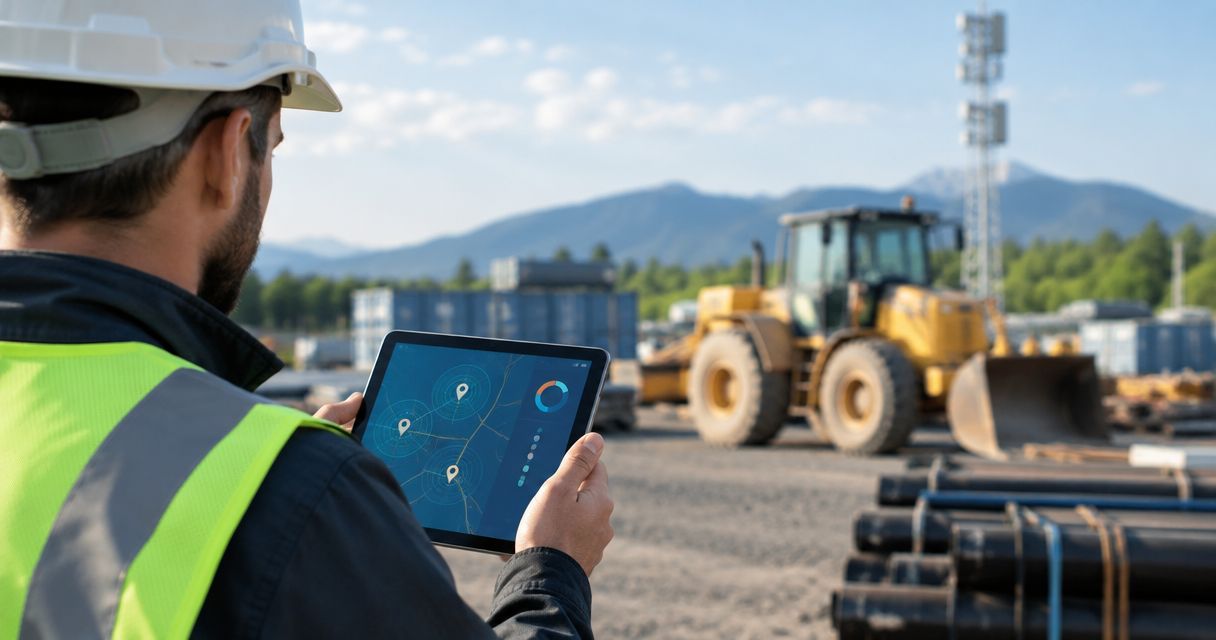
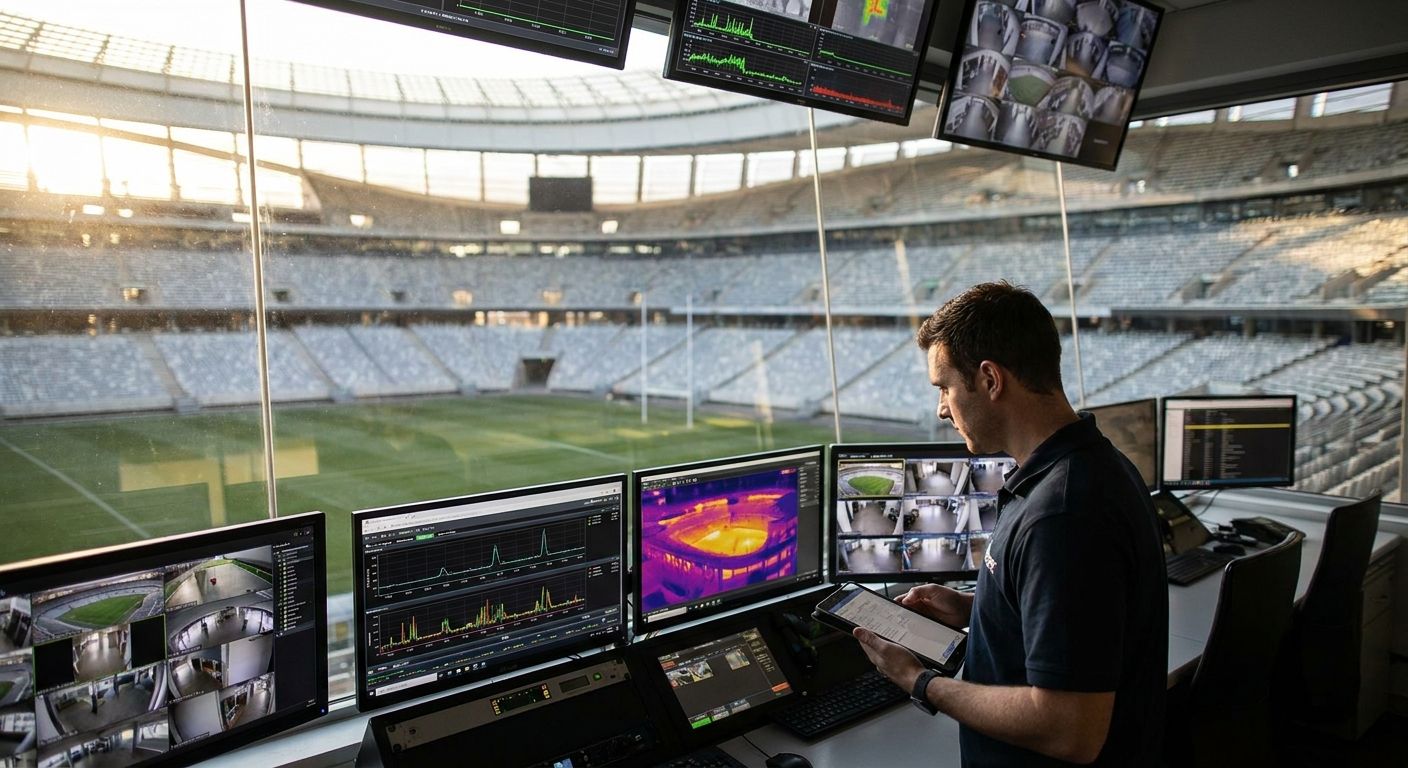
A facility monitoring system for stadiums tracks temperature, humidity, water, energy and equipment condition across mechanical rooms, concourses, suites and the playing surface from one cloud dashboard, so stadium and arena ops teams catch a failing chiller or a leaking pipe before it turns into an event-day incident. Stadiums differ from a typical commercial building because occupancy swings from near-empty to tens of thousands of people inside a few hours, and a single mechanical failure during a sold-out event costs far more in refunds and reputation than the same failure on a quiet Tuesday.
- A facility monitoring system for stadiums pairs wireless sensors with a rules engine that alarms staff before failures reach the concourse.
- Kilo's Free plan covers up to 5 devices at 0 EUR/month; Starter adds up to 25 devices for 25 EUR/month.
- Ice rinks, mechanical rooms and premium suites each need different sensor types and alarm thresholds.
- Digital twins give large venues one map-based view instead of dozens of disconnected building systems.
- Start with mechanical rooms and refrigeration before wiring the whole venue.
Why stadiums and arenas need a facility monitoring system
A stadium isn't one building — it's a boiler room, a dozen premium suites, a concourse full of concession coolers, a playing surface, and in some venues an ice rinks and arenas refrigeration plant, all running on different schedules. ASHRAE Standard 62.1 sets ventilation rate requirements specifically for assembly occupancies like arenas because crowd density changes air quality needs in ways an office building never sees.
The US EPA's ENERGY STAR Portfolio Manager tool includes dedicated property types for open and closed stadiums, which tells you venue operators are already expected to benchmark and report energy performance the way office landlords do. A facility monitoring system for stadiums is what feeds that benchmarking with real data instead of estimated utility bills.
Stadiums also run mechanical equipment through brutal duty cycles: chillers ramp hard two hours before doors open, then idle for days between events. That start-stop pattern is exactly when bearings fail and refrigerant leaks show up — and it's exactly when nobody's watching, because the building is empty on a Tuesday morning.
How to build a facility monitoring system for a stadium or arena
Map every zone before you install a single sensor
Walk the venue and separate it into functional zones instead of treating it as one building. A concourse humidity reading tells you nothing about a walk-in freezer three floors below it.
- Mechanical and boiler rooms
- Concession and kitchen refrigeration
- Premium suites and club levels
- Locker rooms and training facilities
- Playing surface or ice plant
- Loading docks and storage
Instrument mechanical rooms and equipment first
Start where a failure is most expensive: chillers, boilers, and air handlers. Manually logging gauge readings on a clipboard twice a shift catches almost nothing between rounds.
- Temperature and vibration on chillers and pumps
- Run-hour counters on major HVAC units
- Boiler room temperature and CO thresholds
- Water pressure on fire suppression lines
- Power draw on transformers and switchgear
Once a venue has more than a handful of these points, a spreadsheet stops working. This is where a platform like the Kilo IoT Platform earns its place — LoRaWAN or MQTT sensors report into one dashboard, and a rules engine flags a bearing running hot before it seizes, instead of after.
Manage HVAC load around the event schedule, not the clock
A stadium's real challenge is that comfort demand spikes are predictable by event, not by time of day. Static thermostat schedules waste energy on non-event days and fall behind on event days.
- Pre-cool or pre-heat concourses starting two to three hours before doors
- Set back HVAC automatically once the last event ticket scans out
- Track supply and return air temperature by zone, not just one building average
- Compare energy draw on event days against dark days to spot drift
This is the same logic covered in HVAC energy management for any commercial building, but stadiums compress the swing into hours instead of days.
Track concession, suite and ice-plant refrigeration separately
A walk-in cooler behind a concession stand and an ice-resurfacing plant fail differently and need different alarm logic. Bundling them into one generic "cold" alarm buries the signal.
- Door-open sensors on walk-in coolers and freezers
- Compressor run-time and defrost cycle tracking
- Ice sheet or slab temperature where applicable
- Backup power status on critical refrigeration circuits
Set up leak detection before water finds the electrical room
Concourses run miles of plumbing above finished ceilings and near sensitive equipment. A slow leak in a stadium can run for days before anyone notices a stain.
- Point leak sensors under water heaters and near floor drains
- Rope or zone sensors along long plumbing runs near suites
- Water pressure monitoring on main risers
- Threshold alarms tied to unexpected flow at off-event hours
Build alarm escalation that matches event-day staffing
A 3 a.m. temperature drift on a dark Tuesday and the same drift ninety minutes before kickoff need different responses. Kilo's alarm module supports five severity tiers with multi-step escalation chains, quiet hours, and a centralized inbox, so a low-severity reading during downtime doesn't page the same on-call engineer who's needed for a high-severity event-day alert.
- Define severity by both value and time-of-day context
- Route event-day alerts to floor staff, not just facilities managers
- Set quiet hours for non-critical readings overnight
- Keep a shared inbox so alarms aren't lost in one person's email
Submeter premium suites and tenant spaces for billing and reporting
Suites with individual climate control create billing disputes when energy use isn't separated from the shared building load. Manual monthly reads from a single utility meter can't resolve that.
- Submeter each suite or tenant zone independently
- Export usage data on a schedule instead of manual reads
- Flag suites running HVAC when unoccupied
- Tie submetering data to lease or rental terms directly
Put it all on one digital twin instead of a dozen dashboards
A stadium's physical footprint is too large for a single 2D floor plan to communicate clearly to a night-shift engineer. A digital twin platforms for facilities teams approach gives a live 3D building twin with sensors bound to real objects — click the loading dock chiller on the map and see its temperature history, not a spreadsheet row.
A facility monitoring system for stadiums works best for venues running mechanical rooms, concessions, and suites on wireless sensors feeding one rules engine — not for teams that only need a single building's HVAC schedule.
Facility monitoring options for stadiums and arenas compared
| Option | Best for | Starting price | Key limitation |
|---|---|---|---|
| Standalone wireless sensor kits | Single mechanical room checks | Not published | No cross-zone rules or escalation; data stays siloed per kit |
| Legacy wired BMS | Venues with existing wired controls infrastructure | Not published | Retrofitting finished concourses and suites is disruptive and slow |
| In-house SCADA or custom scripts | Venues with dedicated controls engineers on staff | Not published | Needs ongoing engineering upkeep; no built-in alarm escalation |
| Kilo IoT Platform | Multi-zone venues needing one dashboard for HVAC, refrigeration, water, and energy | Free at 0 EUR/month (up to 5 devices); Starter at 25 EUR/month (up to 25 devices) | Free tier caps at 5 devices — a full venue rollout needs Starter or higher |
Sensors and gateways for a stadium-scale rollout, including LoRaWAN temperature, leak and vibration sensors, ship worldwide through Kilo Electronics, the hardware side of the Kilo IoT Platform.
See the platform before you wire a suite
Check dashboards, rules and alarm setup on the Free tier first.
Common mistakes stadiums make with facility monitoring
- Treating the whole venue as one zone. Concourse humidity readings say nothing about a walk-in freezer under the stands — each zone needs its own thresholds.
- Skipping vibration monitoring on mechanical equipment until a chiller fails mid-event, when the repair window is a locked mechanical room and 15,000 people upstairs.
- Ignoring event schedules when setting quiet hours. A drift at 3 a.m. on a dark day matters less than the same drift two hours before doors open.
- Wiring suites for climate control but never submetering them, which turns every disputed utility bill into a manual investigation.
- Choosing a wired BMS retrofit for a venue with finished concourses and suites, when a wireless deployment avoids resurfacing entirely.
FAQ
What is a facility monitoring system for stadiums?
It's a network of wireless sensors reporting into a cloud platform that tracks temperature, humidity, water, energy and equipment condition across mechanical rooms, concourses, suites and the playing surface. It alarms staff on thresholds instead of relying on manual walk-throughs.
How much does a facility monitoring platform cost for an arena?
Kilo's Free tier covers up to 5 devices at 0 EUR/month with no card required, and the Starter tier is 25 EUR/month for up to 25 devices. A full stadium rollout with hundreds of sensors needs a higher tier scoped to device count.
Do stadiums need a wired BMS or can wireless sensors work?
Wireless LoRaWAN or mioty sensors work well in venues with finished concourses and suites where wiring a BMS retrofit would mean resurfacing. A wired BMS still makes sense for new construction where conduit runs are part of the build.
How do you monitor ice rinks and mechanical rooms in the same system?
Both feed sensor data into the same platform but use different alarm thresholds — ice sheet temperature and compressor run-time on one side, boiler and chiller vibration on the other. A single rules engine can hold both rule sets without conflict.
Can a facility monitoring system submeter premium suites separately?
Yes — submetering each suite or tenant zone separately from the shared building load resolves billing disputes over individual climate control usage. Usage exports on a schedule replace manual monthly meter reads.
How fast can a stadium roll out sensors before an event?
Wireless sensors avoid the lead time of running conduit, so mechanical rooms and refrigeration can be instrumented in phases without shutting down concourses. Start with the highest-cost failure points first, then expand zone by zone.
What sensors matter most for a stadium concourse and locker rooms?
Leak sensors near plumbing runs and floor drains, humidity sensors in locker rooms, and door-open sensors on concession coolers cover the most common failure points. Air quality sensors matter more in enclosed concourses than open-air ones.
Is a digital twin necessary for stadium facility monitoring?
It's not required, but a live 3D digital twin with sensors bound to real objects makes it faster for night-shift staff to locate a failing unit across a large physical footprint. Smaller single-building venues can often get by with a 2D dashboard.
How much sensor coverage does a stadium actually need
Most venues over-plan the concourse and under-plan the mechanical room. The concourse rarely causes an event-day emergency — a chiller bearing or a leaking riser does. Instrument the highest-cost failure points first: mechanical rooms, refrigeration, and fire suppression water pressure. Expand to suites and concourse zones once those alarms are proven and the escalation chains actually reach the right person before, not during, an event in 2026.