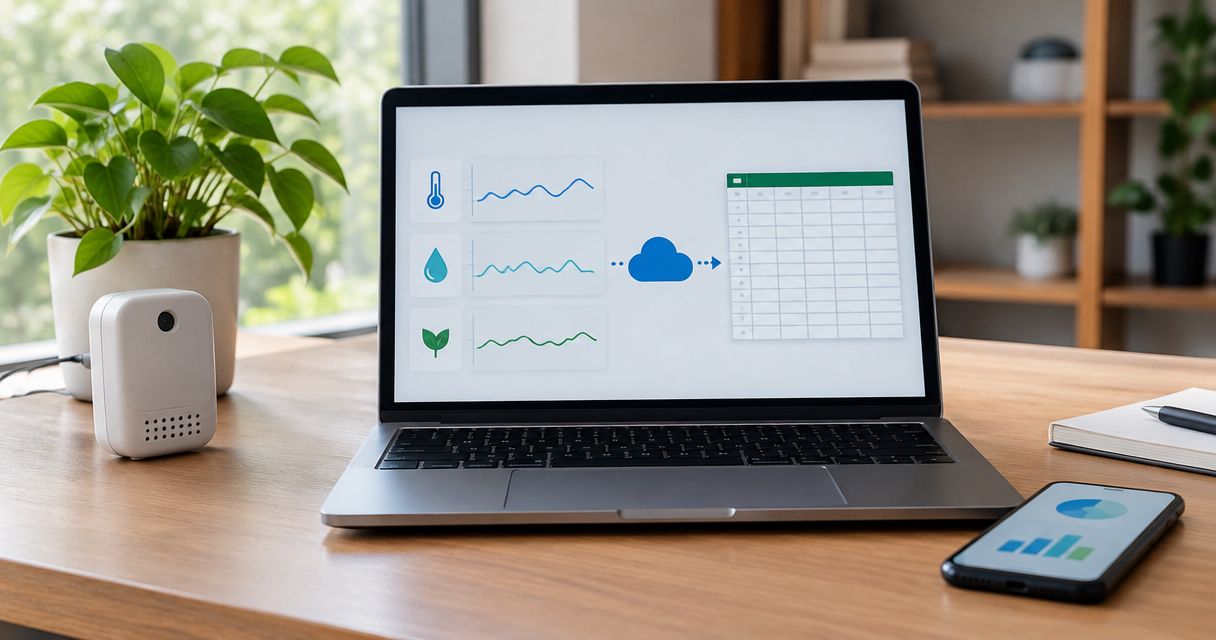
Pharmacy compounding cleanrooms need relative humidity logged continuously, at intervals of 5 to 15 minutes, and held at or below 60% RH in sterile compounding areas — a requirement set by USP General Chapter <797>. A single daily hygrometer reading does not meet that bar: inspectors want a time-stamped record showing the room stayed in range between checks, not a snapshot from the moment someone happened to look.
- USP <797> caps sterile compounding cleanroom humidity at 60% RH; USP <795> leaves the nonsterile limit to facility SOP.
- Continuous, time-stamped logging is what humidity monitoring in a pharmacy compounding cleanroom actually needs for a 2026 inspection.
- A rules engine can alarm the instant relative humidity crosses 60% RH, well before it shows up on a manual log.
- ISO Class 7 buffer rooms and ISO Class 5 primary engineering controls both need humidity tied to real timestamps, not memory.
Why does USP <797> require continuous humidity monitoring?
Moisture above 60% RH creates a growth medium for mold and bacteria on compounding surfaces, in gowning areas, and inside laminar airflow hoods. USP General Chapter <797>, revised with an official date of November 1, 2023, sets that 60% ceiling for sterile compounding buffer rooms and ties it directly to microbial contamination control, not comfort. A pharmacist-in-charge who can only point to a paper log filled in once per shift has no way to prove the room stayed under 60% RH for the other 22 hours of the day.
A cleanroom facility monitoring system closes that gap by writing every reading to a timestamped record automatically, which is the difference between a defensible audit trail and a guess. That's the practical reason continuous data has become the expectation rather than the exception in sterile and nonsterile compounding suites alike in 2026.
How to monitor humidity in a pharmacy compounding cleanroom
The requirement changes slightly by USP chapter and room classification, but the monitoring approach is the same everywhere: a fixed or wireless sensor, a defined threshold, and a record that survives an inspection.
| USP Chapter | Room Type | Humidity Ceiling | Typical Monitoring Interval |
|---|---|---|---|
| <797> | Sterile compounding buffer room (ISO Class 7) | ≤60% RH | Continuous, 5-15 min |
| <795> | Nonsterile compounding area | Facility-defined, commonly ≤60% RH | Continuous or per SOP |
| <800> | Hazardous drug handling (layered on <795>/<797>) | Same ceiling as underlying chapter | Continuous where sterile |
Sensor placement matters more than most SOPs spell out. Mount the RH and temperature sensor away from the direct airflow of an HVAC diffuser or laminar flow hood, at working height, and clear of the door swing between the anteroom and buffer room — a sensor sitting in a draft or a doorway reads the HVAC system, not the room.
What humidity level does USP <797> require in a cleanroom?
USP <797> requires relative humidity in sterile compounding buffer rooms and anterooms to stay at or below 60% RH, tied to ISO Class 7 classification for the buffer room and ISO Class 5 for the primary engineering control (the hood or isolator) under ISO 14644-1 particle standards. That 60% figure is a ceiling, not a target range — there's no minimum floor specified, though most facilities keep humidity well above single digits to avoid static discharge and product desiccation.
The practical failure mode isn't a slow seasonal drift most pharmacies catch. It's a short spike — a stuck door, a failed dehumidifier coil, an HVAC unit cycling off overnight — that pushes the room over 60% RH for twenty minutes and self-corrects before the next shift's manual check. Continuous monitoring is the only way to catch that kind of excursion.
What humidity level does USP <795> require for nonsterile compounding?
USP <795> does not set a single fixed humidity number the way <797> does. It requires the compounding environment to be controlled based on the stability data of the preparations made there, which in practice means most nonsterile compounding pharmacies adopt the same 60% RH ceiling used for sterile areas as their internal SOP baseline.
Hygroscopic active ingredients — powders that absorb moisture and clump or degrade — are the driver behind that self-imposed limit. A facility handling moisture-sensitive capsules or suppositories in 2026 typically treats humidity control as seriously as a sterile buffer room does, even without a chapter number forcing the exact figure.
Why does humidity drift in a compounding cleanroom?
- HVAC dehumidification undersized for the outside air load — common in humid climates during summer months when the make-up air handler can't pull enough moisture out
- A propped door between anteroom and buffer room breaks the pressure cascade and lets ambient humidity in with the airflow
- Gowning sinks and hand-washing stations near the anteroom add a local moisture source that a single central sensor won't catch
- Seasonal swings overload a dehumidifier sized for average conditions rather than peak humidity days
- A wireless sensor with a dying battery reports a stale last-known value instead of a live reading
- A hygrometer calibrated once at installation and never rechecked, drifting slowly out of accuracy over months
How do you set up continuous humidity monitoring for compliance?
- Place a wireless RH and temperature sensor in each classified room — buffer room, anteroom, and any segregated compounding area — away from diffusers and door swing.
- Connect sensors over LoRaWAN, mioty, or MQTT into a monitoring platform rather than a standalone data logger that needs manual downloads. Kilo's built-in LoRaWAN and mioty network server means there's no separate network server to stand up, and the MQTT connector picks up readings from an existing BMS or PLC if the facility already has one.
- Build a threshold rule — RH above 60% for a set duration — using a visual rules engine with CEL expressions, and step through it against a test payload before it goes live.
- Configure a multi-step alarm escalation across the platform's five severity tiers, so a sustained excursion pages the pharmacist-in-charge by SMS, email, or push, with quiet hours respected for lower-severity alerts.
- Keep an immutable, timestamped audit trail tied to each sensor and rule, so the record an inspector asks for already exists instead of getting assembled after the fact.
A live 3D digital building twin with sensors bound to the buffer room, anteroom, and hood makes it easier to spot which zone triggered an alarm without walking the floor plan from memory. For pharmacies that also hold vaccines or biologics nearby, the same platform extends to vaccine storage monitoring for clinics and pharmacies, since the compounding suite and the cold storage unit often sit a few feet apart and get audited together.
Compounding cleanrooms usually track pressure differentials alongside humidity — a positive-pressure buffer room that loses its cascade is a separate finding from a humidity excursion, but both get flagged on the same inspection. Cleanroom pressure differential monitoring covers the sensor placement and alarm logic for that side of the room.
Is temperature or humidity the bigger risk in a compounding cleanroom?
Humidity above 60% RH is the more commonly cited USP <797> finding, because it directly supports microbial growth, while temperature excursions more often affect specific drug stability rather than the room's classification status. Both need continuous monitoring — a temperature spike that coincides with a humidity spike (an HVAC failure, for example) is usually the same root cause showing up on two sensors.
How often should humidity data be logged for a USP <797> inspection?
Continuously, at intervals of 5 to 15 minutes, is the practical standard most compounding pharmacies target for USP <797> inspection readiness in 2026. A daily or per-shift manual reading technically produces a log, but it can't demonstrate the room stayed under 60% RH between those checks, which is the gap inspectors look for first.
What happens when compounding cleanroom humidity exceeds 60% RH?
An excursion above 60% RH puts the sterile compounding area out of its USP <797> operating range, which can trigger a documented investigation, a review of preparations made during the excursion window, and corrective action on the HVAC or dehumidification system. The severity depends on how long the excursion lasted and whether it was caught in real time or discovered later during a log review.
FAQ
What is the maximum humidity allowed in a pharmacy compounding cleanroom?
USP General Chapter <797> sets 60% RH as the ceiling for sterile compounding buffer rooms. USP <795> nonsterile areas typically follow the same 60% limit as an internal SOP rather than a hard chapter requirement.
Does USP <795> have a specific humidity number?
USP <795> does not specify a fixed humidity percentage. It requires environmental conditions to match the stability needs of the preparations made, and most facilities apply the same 60% RH ceiling used in sterile compounding as their working standard.
How is humidity monitoring different for ISO Class 5 vs ISO Class 7 areas?
The 60% RH humidity ceiling under USP <797> applies the same way to both classifications; ISO Class 5 and Class 7 under ISO 14644-1 are particle-count standards for the hood and buffer room, not separate humidity thresholds.
Can a manual hygrometer log meet USP <797> requirements?
A manual hygrometer log can meet minimum documentation requirements if readings are frequent and consistent, but it cannot show what happened between checks. Continuous, time-stamped monitoring is what most compounding pharmacies now use to close that gap.
What sensor type is used for cleanroom humidity monitoring?
A combined relative humidity and temperature sensor, wired or wireless over LoRaWAN, mioty, or MQTT, mounted away from HVAC diffusers and door swing, is the standard setup for a compounding buffer room or anteroom.
Do compounding pharmacies need to monitor both humidity and pressure?
Yes. USP <797> ties buffer room classification to both airflow pressure cascades and environmental conditions including humidity, so most facilities monitor both with the same platform rather than separate systems.
How quickly should a humidity excursion trigger an alert?
An excursion above 60% RH should trigger an alert within minutes, not at the next scheduled check. A rules engine with a threshold set at 60% RH and a short sustained-duration window catches this faster than any manual log interval.
What's the fastest way to catch a humidity excursion before an inspection?
Many compounding pharmacies still rely on manual spot checks at the start of each shift instead of continuous data, and the gap between those checks is exactly where an excursion goes undocumented until it surfaces during an inspection. A threshold alarm set at 60% RH, tied to a five-tier escalation chain, catches the spike the moment it happens instead of the moment someone happens to look. That's the entire difference between a passed inspection and a documented finding.
Set humidity alerts before your next audit
Configure SMS and email thresholds for cleanroom humidity in one pass.