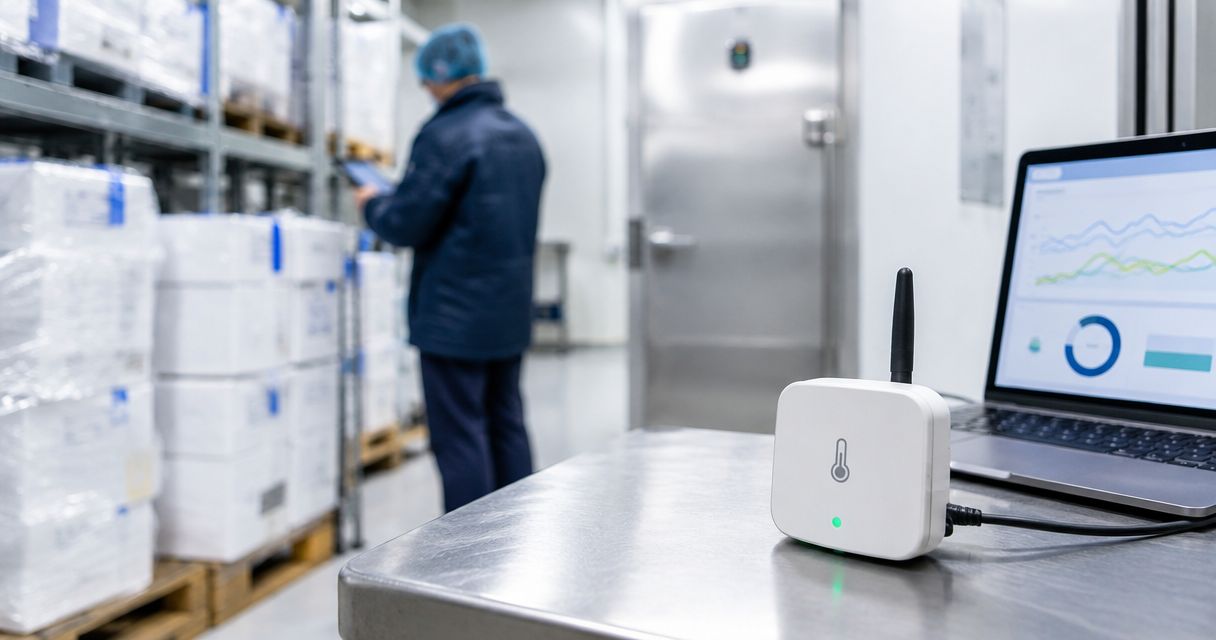
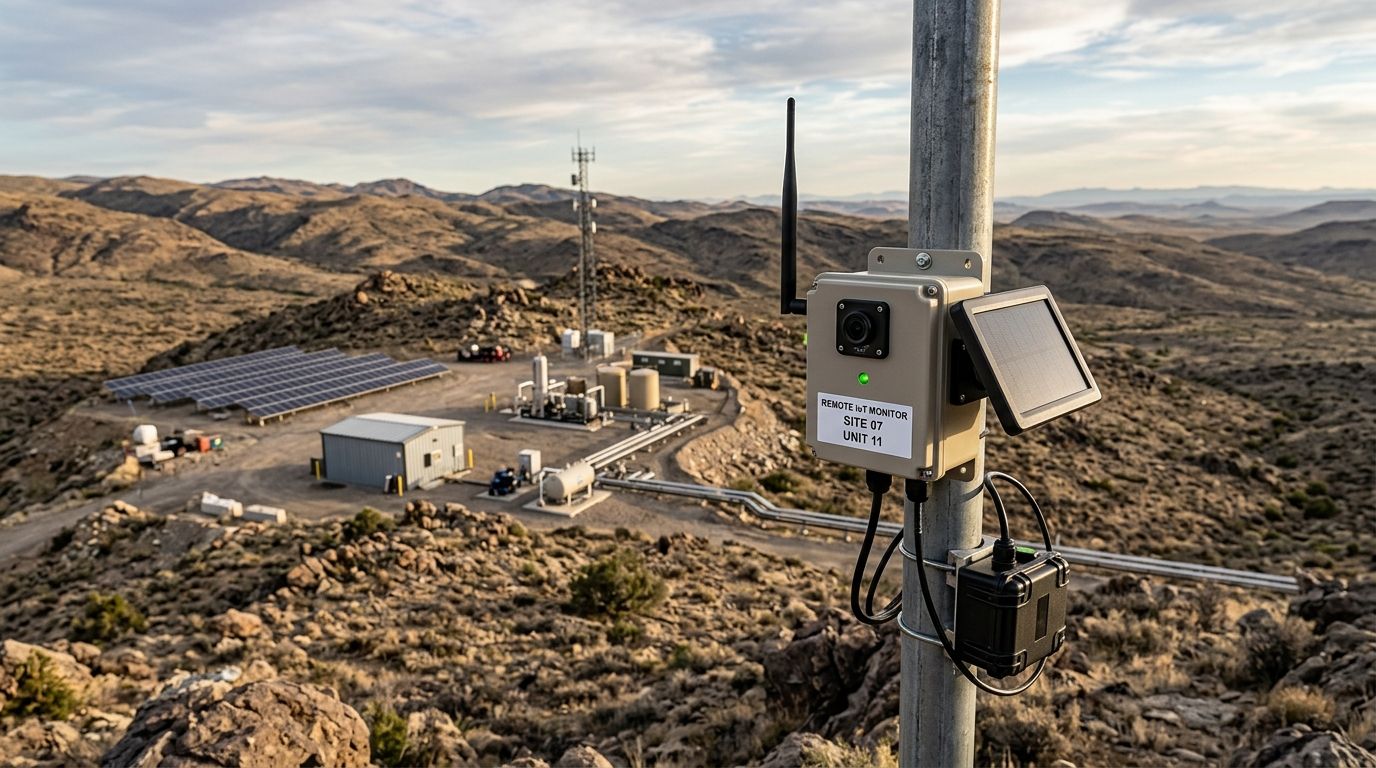
IoT monitoring for unmanned remote industrial sites means tracking temperature, pressure, power, and equipment status at a facility with no permanent staff, using battery-powered sensors, long-range wireless, and automated alarms instead of a person doing a walkthrough. A pump station 40 miles from the nearest paved road, a telecom tower on a ridge line, or a well pad with no cell signal all share the same problem: nobody is there to notice when something drifts out of range. The gap between visits is exactly where equipment fails, and closing that gap is what this kind of monitoring is for.
- IoT monitoring unmanned remote sites replaces scheduled visits with sensors, alarms, and a dashboard; LoRaWAN and mioty usually beat cellular where coverage is patchy.
- Kilo runs a built-in LoRaWAN and mioty network server, so a remote deployment does not need a separate network server stack layered on top of the radios.
- Power design decides more outcomes than sensor choice: a solar-and-battery system has to survive a low-sun winter week, not just a clear summer afternoon.
- Satellite IoT covers sites with zero terrestrial signal but runs at higher per-message cost and longer latency than LoRaWAN or mioty.
- Alarms need multi-step escalation and quiet-hours logic in 2026, because there is no shift supervisor on site to catch a missed page.
Why unmanned remote sites need continuous IoT monitoring
A staffed facility catches problems by accident: someone walks past a gauge, smells something off, notices a door left open. An unmanned site has none of that. A pump losing prime, a battery bank sagging under load, or a tank creeping toward overflow can run unnoticed for the entire gap between scheduled visits, which on many remote sites is weeks.
Oil and gas operators already answer to OSHA's Process Safety Management standard (29 CFR 1910.119) for tracking process conditions on hazardous sites, and outdoor electronics at these locations are typically specified against IEC 60529 ingress-protection ratings because the enclosure has to survive rain, dust, and temperature swings with nobody around to wipe it down. Continuous monitoring is how a site meets that bar without paying for a technician to sit there. Satellite IoT connectivity exists specifically for the subset of these sites where even that monitoring data has nowhere terrestrial to travel.
The practical difference between a monitored and an unmonitored remote site is almost always speed of response. A threshold alarm firing at 2 a.m. and escalating to an on-call phone beats a technician discovering the same fault on a two-week rotation.
Map every failure mode before you pick a sensor
Start with what actually breaks at this specific type of site, not a generic sensor catalog.
- Temperature excursion in an equipment cabinet or enclosure
- Pressure drop or spike in a pipeline segment
- Tank level approaching overflow or running dry
- Compressor or pump short-cycling
- Gate, hatch, or panel door left open
- Battery voltage sagging below the operating threshold
- Unexpected motion or vibration signaling tamper or intrusion
Choose connectivity that works without cellular coverage
Remote sites are remote precisely because cellular towers thin out there. LoRaWAN and mioty both solve the last-mile problem cellular can't: long range from a single gateway, low power draw, and no dependence on carrier coverage at the sensor end. The industrial IoT platform built for oil and gas remote sites is a useful reference point for how this gets architected on a well pad or pipeline segment.
- LoRaWAN for sites within a few kilometers of a gateway, even with partial line-of-sight
- mioty, standardized under ETSI TS 103 357, when the site needs a large sensor count off a small number of base stations
- A cellular modem or satellite terminal as the gateway's backhaul link to the cloud, since the sensor-to-gateway hop and the gateway-to-internet hop are separate problems
- Satellite IoT as the primary path only when terrestrial signal genuinely does not reach
- A second backhaul path for any site where a missed alarm has real cost
Design power for a site with no grid connection
Sensor battery life gets the attention, but the gateway is usually the thing that goes dark first. Size the system for the worst week of the year, not the best.
- Solar panel capacity sized against winter sun-hours, not summer output
- Battery bank with margin for several consecutive low-sun days
- Sensor battery life planned independently of gateway power, since a dead gateway shouldn't mean lost sensor data once it reconnects
- Backup runtime on the gateway itself, covered in detail in backup power planning for critical IoT sensor deployments
- A low-battery alarm on the gateway and the sensors both, not just one
Pick sensors rated for the site, not the datasheet minimum
A sensor rated to IP54 in a lab environment will not survive a season at a coastal terminal or a dusty mine site. Buy to the environment.
- IEC 60529 IP67 or better for anything outdoors or exposed to washdown
- Operating temperature range that covers the site's real winter low and summer high, not a generic 0-40°C spec
- UV-stable housing material for sites with year-round sun exposure
- Vibration rating appropriate to equipment-mounted sensors near pumps or compressors
- Corrosion-resistant housings for coastal, chemical, or wastewater sites
Give the site a digital twin instead of a spreadsheet
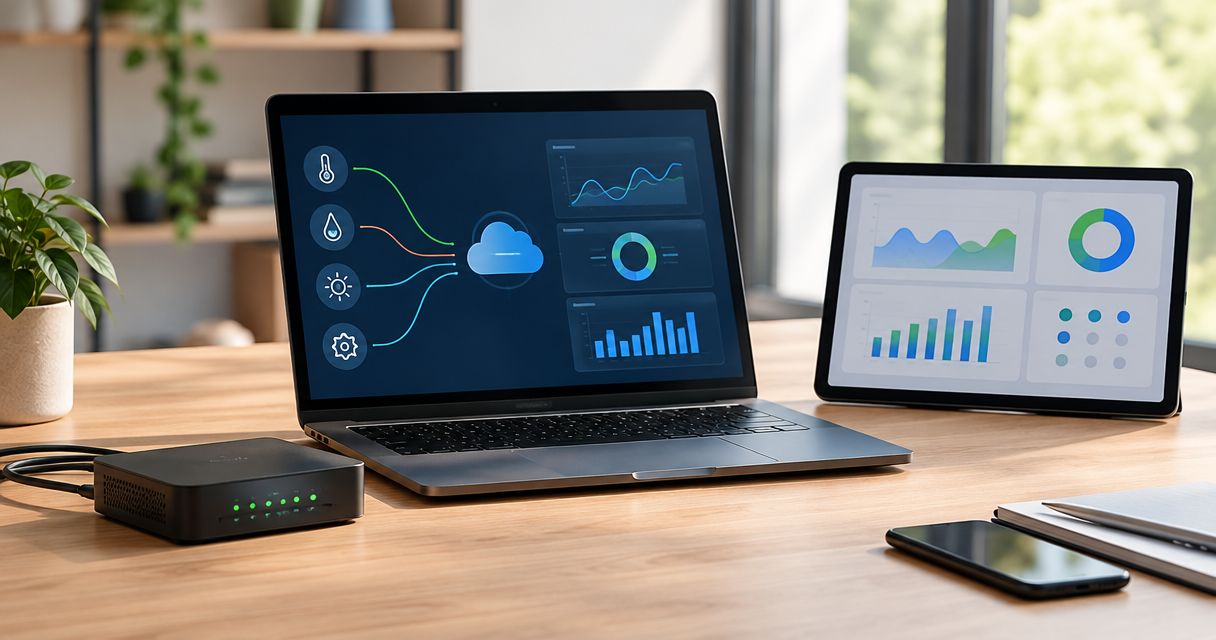
Once sensors and connectivity are in place, the data needs somewhere coherent to land. A per-device digital twin keeps every sensor's current state, history, and location in one place instead of scattered logbook entries or disconnected spreadsheets.
- A live digital twin for each sensor, tank, or piece of equipment
- A map widget pinning gateways and sensors across a multi-acre or multi-mile site
- Gauge and chart widgets for the handful of readings operations actually watches daily
- Historical trend views to catch slow drift, not just hard threshold breaches
Configure alarms and escalation for a site nobody is standing at
An alarm that only pages one person on one channel is an alarm that gets missed. Kilo's alarm system runs five severity tiers with multi-step escalation chains, so a level-one warning can notify a group by email while a level-five critical alarm calls, texts, and pushes to an on-call rotation until someone acknowledges it.
- Severity tiers matched to real consequence, not just "high" and "low"
- Escalation chains that move up the chain of command if nobody acknowledges
- Email, SMS, and push notification, not a single channel
- Quiet hours logic for non-critical alerts, with critical tiers exempt
- A centralized alarm inbox so a manager can see what fired last week across every site
For the mechanics of setting the thresholds themselves, SMS and email alerts for critical IoT sensor thresholds walks through the configuration step by step.
Set up remote commands for the few things worth controlling
Most unmanned sites only need to actuate a handful of things remotely: a valve, a relay, a pump. Named, typed commands with parameter validation and closed-loop verification mean a dispatcher can confirm a command actually executed, not just that it was sent.
- Downlink commands over MQTT or LoRaWAN Class C for devices that support it
- Parameter validation before a command is sent, not after
- Closed-loop confirmation that the device actually changed state
- Execution history so every remote action is logged and reviewable
Map your remote site's monitoring plan
See how connectivity, power, and alarms fit together on the Kilo IoT Platform.
LoRaWAN vs mioty vs cellular vs satellite for unmanned remote sites
| Connectivity option | Best for | Key limitation |
|---|---|---|
| LoRaWAN | Sites within a few kilometers of a gateway, moderate sensor count | Range drops fast in dense vegetation or deep terrain |
| mioty (ETSI TS 103 357) | Large sites needing many sensors off a small number of base stations | Narrower commercial sensor catalog than LoRaWAN as of 2026 |
| Cellular / LTE-M | Sites already near tower coverage with steady gateway power | Coverage gaps tend to be exactly where unmanned sites sit |
| Satellite IoT | Sites with zero terrestrial signal: pipeline midpoints, offshore pads, high desert | Higher per-message cost and longer latency than terrestrial radio |
None of these wins outright. Most multi-site operators end up running LoRaWAN or mioty at the sensor layer and reserving satellite for the sites where nothing terrestrial reaches the gateway at all.
Common IoT monitoring mistakes at unmanned remote sites
- Sizing solar for a sunny installation day instead of the worst week of winter
- Assuming cellular backhaul will be there when the gateway needs it most
- Routing every alarm, critical or not, to the same single person
- Buying sensors rated for indoor conditions and mounting them outdoors
- Skipping a calibration schedule because "nobody's out there to do it anyway"
That last one compounds quietly. A sensor drifting out of calibration on a site visited twice a year can report false-normal readings for months before anyone catches it.
FAQ
What is IoT monitoring for unmanned remote sites?
It is the use of wireless sensors, resilient connectivity, and automated alarms to track equipment and environmental conditions at facilities with no on-site staff, replacing scheduled walkthroughs with continuous data and remote alerts.
Is LoRaWAN or mioty better for a remote industrial site?
LoRaWAN fits moderate sensor counts within a few kilometers of a gateway; mioty, standardized under ETSI TS 103 357, is built for larger sensor counts off fewer base stations. Neither is universally better, and many sites run both depending on sensor density.
How do you monitor a site with no cellular signal?
Use LoRaWAN or mioty at the sensor level and back the gateway with a satellite connection when terrestrial coverage genuinely does not reach the site.
How long do sensor batteries last at an unmanned remote site?
LoRaWAN Class A devices, which transmit briefly and sleep the rest of the time, commonly run five to ten years on a single non-rechargeable lithium battery, a figure widely cited in LoRa Alliance and chipset vendor documentation.
What alarm severity levels should a remote site use?
Kilo supports five severity tiers with multi-step escalation, so low-priority drift can notify a group by email while a critical breach escalates through call, SMS, and push until someone acknowledges it.
Can you control equipment remotely at an unmanned site?
Yes, through named typed commands sent as downlinks over MQTT or LoRaWAN Class C, with parameter validation and closed-loop confirmation that the equipment actually changed state.
Does an unmanned remote site need a separate network server?
Not with Kilo. The platform runs a built-in LoRaWAN and mioty network server, so there is no separate network server to deploy and maintain alongside the connectivity.
What enclosure rating do outdoor sensors need at a remote site?
IEC 60529 IP67 or better is the common baseline for sensors exposed to rain, dust, or washdown at unstaffed outdoor sites, since there is no one on hand to shield the equipment during weather events.
How long can a sensor run before someone visits an unmanned site
The honest answer for 2026 deployments is longer than most operators plan around: a well-specified LoRaWAN Class A sensor on a non-rechargeable lithium cell can outlast the site's own visit schedule, which shifts the real bottleneck from battery replacement to gateway backhaul and calibration drift. Kilo Electronics, Kilo's sister hardware company, ships pre-configured sensors and gateways with worldwide shipping for teams that want a matched hardware set rather than sourcing components separately.